
The Facade Revolution: Why Visionary Architects Are Choosing Textile Over Aluminum
For decades, aluminum has been the default choice for curtain walls, prized for its strength and sleekness. But a quiet revolution is reshaping our skylines. A new generation of architects is looking beyond the rigid, metal skin and discovering the immense potential of textile facades. This isn't a passing trend; it's a fundamental shift toward smarter, more sustainable, and stunningly beautiful buildings. Here’s why textile facades are increasingly the preferred choice.
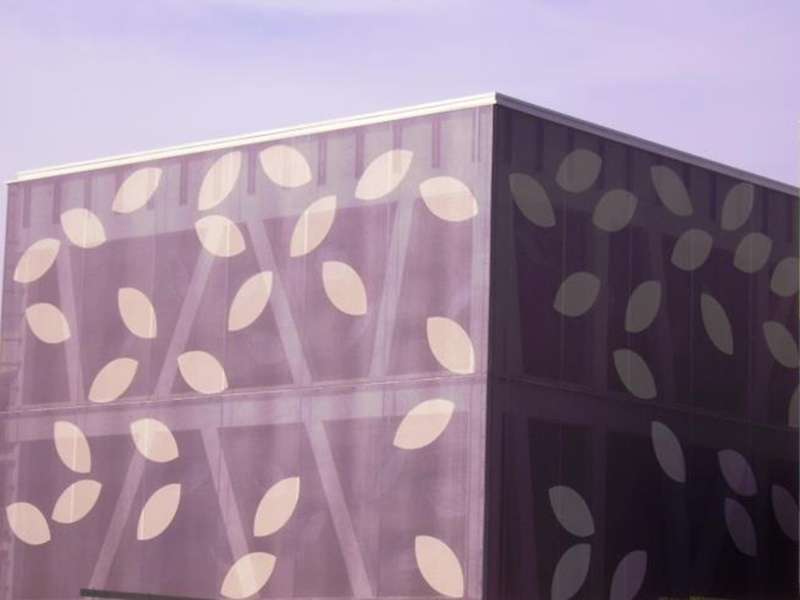
Unmatched Lightness and Design Freedom
The most immediate advantage is weight. While aluminum panels are already relatively light, textile facades take lightweight construction to a new level. The core fabric of a textile facade can weigh as little as 0.5-1.5 kg per square meter, with the entire system weighing roughly one-tenth of a glass curtain wall. This drastically reduces the structural load on a building, offering a massive advantage for retrofitting existing structures without costly reinforcement.
This lightness translates directly into design freedom. Textile materials are inherently flexible, allowing for the creation of flowing, organic forms—curves, waves, and complex three-dimensional shapes—that are difficult and expensive to achieve with rigid metal panels. Furthermore, these fabrics can be digitally printed with any pattern or color, turning a simple facade into a bespoke branding opportunity or a dynamic piece of public art.
Superior Energy Performance and Comfort
Beyond aesthetics, textile facades are powerful tools for energy efficiency. They act as highly effective solar shading, capable of blocking over 70% of solar heat gain and reducing cooling costs by up to 78%. Unlike opaque aluminum, high-quality textile meshes provide natural, diffused daylight, reducing the need for artificial lighting while minimizing glare. The air gap created between the textile layer and the building's main wall adds an extra layer of thermal insulation, further lowering energy consumption.
A Leap Forward in Sustainability
In an era of urgent environmental responsibility, textile facades offer a compelling green profile. Many modern fabrics are fully recyclable, and some advanced coatings can even actively filter pollutants from the air. The reduced material usage, lower energy demands during operation, and potential for lightweight retrofitting all contribute to a significantly lower carbon footprint compared to conventional metal or glass systems.
Faster, More Cost-Effective Construction
Traditional curtain walls are labor-intensive and time-consuming to install. Textile facades, by contrast, are typically prefabricated in a factory and then tensioned on-site. This modular approach can make installation two to three times faster than conventional systems, dramatically shortening project timelines and reducing disruption. This speed, combined with lower material and structural costs, makes textile facades a highly competitive and cost-effective solution.
The Future is Woven, Not Welded
Aluminum curtain walls will always have their place, but they are no longer the only option. For architects and developers seeking to combine striking aesthetics, superior energy performance, and genuine sustainability, the textile facade has emerged as the superior choice. It represents a shift from a heavy, static building envelope to a light, dynamic, and intelligent skin—a material that is as functional as it is beautiful. The future of the facade is flexible, and it is woven.
More Facade projects, please visit: https://www.cantensile.com/facade_c0_ss.
If any inquiry about textile facade, pls mail to canobbio@canobbio.com.cn.


 خدمة الإنترنت
 +8613600065322
 canobbio@canobbio.com.cn
 +8613600065322


